Risk factors in postoperative complications of inguinal hernias A single-center observational study.
Article Sidebar
Main Article Content
Abstract
Introduction: Inguinal hernioplasty is among the most common surgical procedures worldwide. Despite the adoption of tension-free techniques, postoperative morbidity remains a significant clinical and socioeconomic issue. This study aimed to identify the risk factors linked to postoperative complications in patients undergoing inguinal hernia repair at a regional surgical center.
Materials and Methods: A retrospective, observational, and analytical study was carried out at the Teodoro Maldonado Carbo Specialty Hospital in Guayaquil, Ecuador, from 2019 to 2021. Out of a population of 892 patients, a random sample of 142 records with surgical complications was selected for comparison with records without complications. Demographic, technical, and clinical variables were analyzed using chi-square and Student's t tests, and the Odds Ratio (OR) was calculated using SPSS v.26 software.
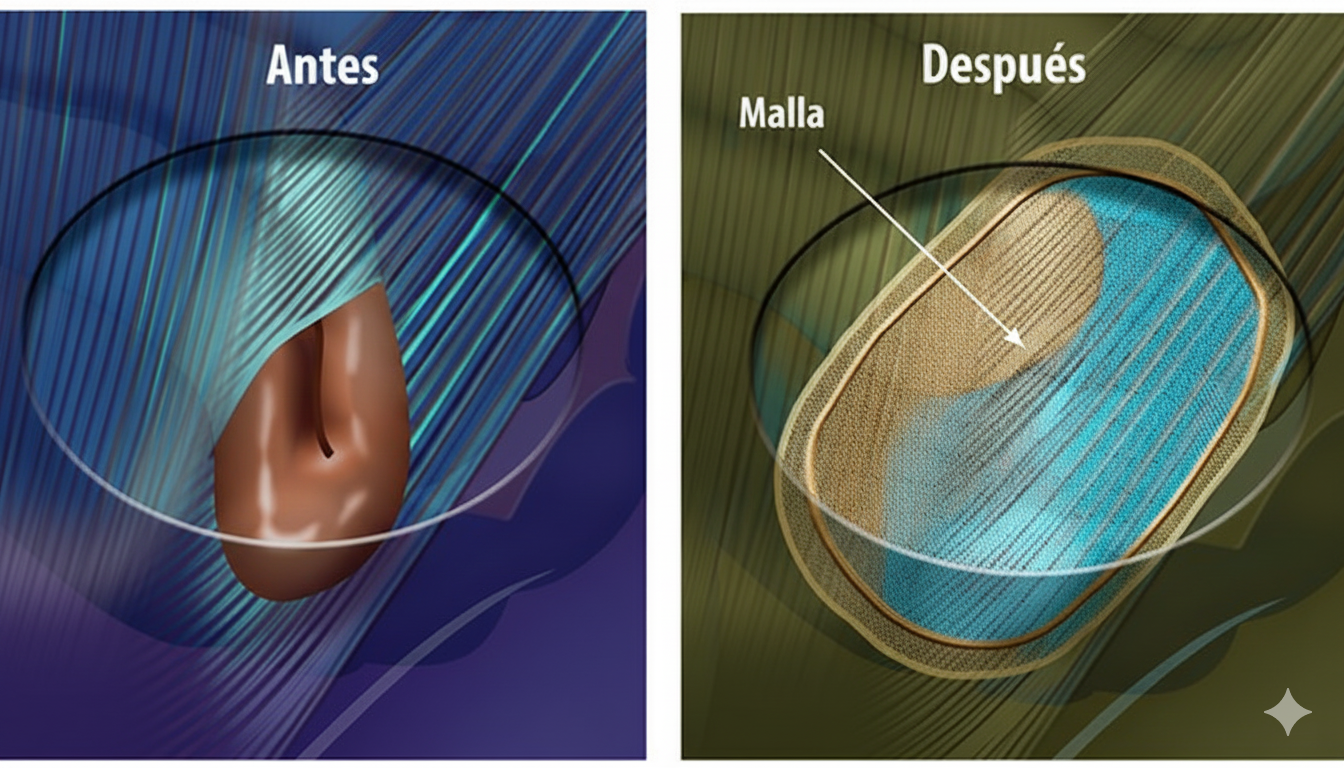
Results: The overall incidence of complications was 15.9% (95% CI 13.5–18.3%). The most frequent adverse events were seromas (34.5%), infections (20.4%), and wound dehiscence (14.8%). The main statistically significant risk factors were the lack of prosthetic mesh application (OR: 3.76; P < 0.0001), the use of the Bassini technique compared to the Lichtenstein technique (OR: 2.59; P < 0.0001), type 2 diabetes mellitus (OR: 1.81; P = 0.0012), and a surgical time exceeding 90 minutes (OR: 1.50; P = 0.0277). Factors such as obesity and a history of hernia did not show statistical significance.
Conclusions: The most critical risk factors for complications in inguinal hernioplasty are technical and metabolic. The non-use of mesh and the application of tension techniques drastically increase morbidity. It is imperative to standardize the Lichtenstein technique and optimize preoperative glycemic control to reduce the burden of complications and improve institutional clinical outcomes.
Downloads
Article Details

This work is licensed under a Creative Commons Attribution-NonCommercial-ShareAlike 4.0 International License.