Jejunal adenocarcinoma in a young patient A rare and late-diagnosed cancer. Case report.
Article Sidebar
Main Article Content
Abstract
Introduction: Jejunal adenocarcinoma is a rare malignant neoplasm, representing less than 3% of gastrointestinal tumors. Its nonspecific clinical presentation often leads to delayed diagnosis and a poor prognosis in advanced stages.
Case Report: We present the case of a 29-year-old male patient with a six-month history of abdominal pain, melena, significant weight loss, and anemia.
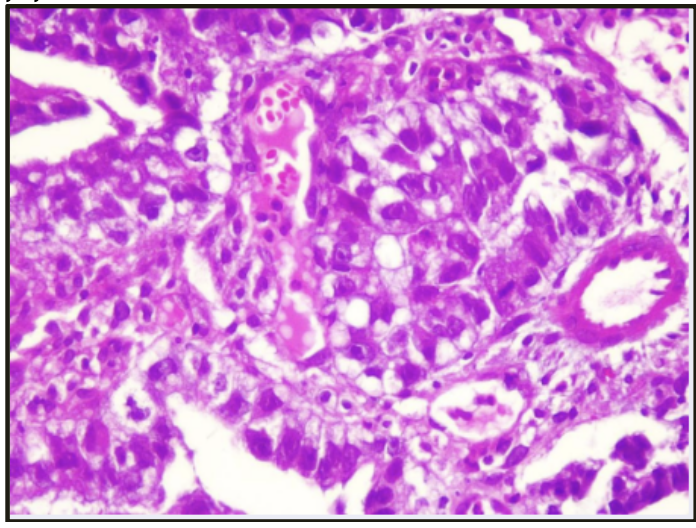
Diagnostic Workup: Initial endoscopic studies revealed no lesions. Subsequently, enteroscopy identified an exophytic tumor in the proximal jejunum with partial involvement of the intestinal lumen. Histopathological examination confirmed a moderately differentiated jejunal adenocarcinoma. Imaging studies showed advanced disease with retroperitoneal and intraperitoneal lymph node conglomerates, with invasion of adjacent structures, which allowed the establishment of criteria for unresectability, that is, a tumor that is not surgically viable, so the patient was referred to a clinical oncologist for systemic treatment.
Discussion: Jejunal adenocarcinoma is associated with vague symptoms, difficulties in its diagnostic evaluation, and the absence of specific tumor markers, which explains its late diagnosis. Surgical resection with clear margins and regional lymphadenectomy is the treatment of choice in early stages. In advanced stages, management is primarily systemic or palliative. In recent years, immunotherapy has emerged as a potential therapeutic option in select subgroups, although the available evidence remains limited.
Conclusions: Jejunal adenocarcinoma presents a diagnostic and therapeutic challenge due to its low incidence and nonspecific clinical presentation. A high index of clinical suspicion and a timely diagnostic approach are essential to improve prognosis. Further studies are needed to define new therapeutic strategies, especially in advanced disease.
Downloads
Article Details

This work is licensed under a Creative Commons Attribution-NonCommercial-ShareAlike 4.0 International License.