Pyogenic liver abscess as a cause of persistent fever.
Article Sidebar
Main Article Content
Abstract
Introduction: Pyogenic liver abscess (PLA) is a suppurative collection of the hepatic parenchyma associated with substantial morbidity and mortality if not promptly recognized and treated. Its clinical presentation is frequently nonspecific—characterized by persistent fever, chills, and abdominal pain—making early emergency diagnosis challenging, particularly in patients with prior hepatobiliary surgery.
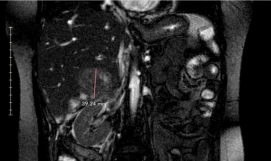
Case report: A 58-year-old Chinese woman with a history of hepatectomy one year prior for an unspecified indication presented with a two-week history of persistent fever, chills, arthralgias, nausea without emesis, a single diarrheal episode, pallor, and right upper quadrant tenderness on superficial and deep palpation. Admission workup revealed elevated transaminases (AST 248 U/L, ALT 292 U/L), alkaline phosphatase (293 U/L), and gamma-glutamyl transferase (232 U/L), alongside hyperglycemia (277 mg/dL) and hyponatremia (128 mmol/L), with negative dengue serology and negative tumor markers. Abdominal ultrasonography showed a focal hepatic lesion involving segments V–VI (and IVB); triphasic computed tomography demonstrated a right hepatic lobe mass with a central necrotic zone (~25 HU); and magnetic resonance cholangiopancreatography identified a 326 mL lesion with liquefactive necrosis without overt biliary obstruction. Culture of purulent aspirate yielded extended-spectrum beta-lactamase (ESBL)-producing Klebsiella pneumoniae, susceptible to carbapenems, piperacillin/tazobactam, amikacin, tigecycline, and ceftazidime/avibactam, and resistant to fluoroquinolones, trimethoprim/sulfamethoxazole, and tetracyclines.
Case evolution: Following percutaneous drainage for source control and microbiological sampling, combined with susceptibility-guided antimicrobial therapy, the patient achieved a favorable clinical course.
Conclusions: PLA should be included in the differential diagnosis of persistent fever accompanied by hepatobiliary enzyme abnormalities. Combining cross-sectional imaging, percutaneous drainage, and targeted antibiotic therapy is essential for managing ESBL-producing K. pneumoniae infections and achieving clinical recovery.
Downloads
Article Details

This work is licensed under a Creative Commons Attribution-NonCommercial-ShareAlike 4.0 International License.