Congenital bilateral double collecting system Case report.
Article Sidebar
Main Article Content
Abstract
Introduction: Duplication of collecting systems is the most common congenital anomaly of the upper urinary tract, with an incidence of 0.8% and a prevalence of approximately 4%. It is more frequent in females. Prenatal diagnosis is possible via ultrasound, but it is usually confirmed after birth when complications arise. Objective: To report a case of bilateral duplicate collecting systems in a newborn and analyze its clinical relevance.
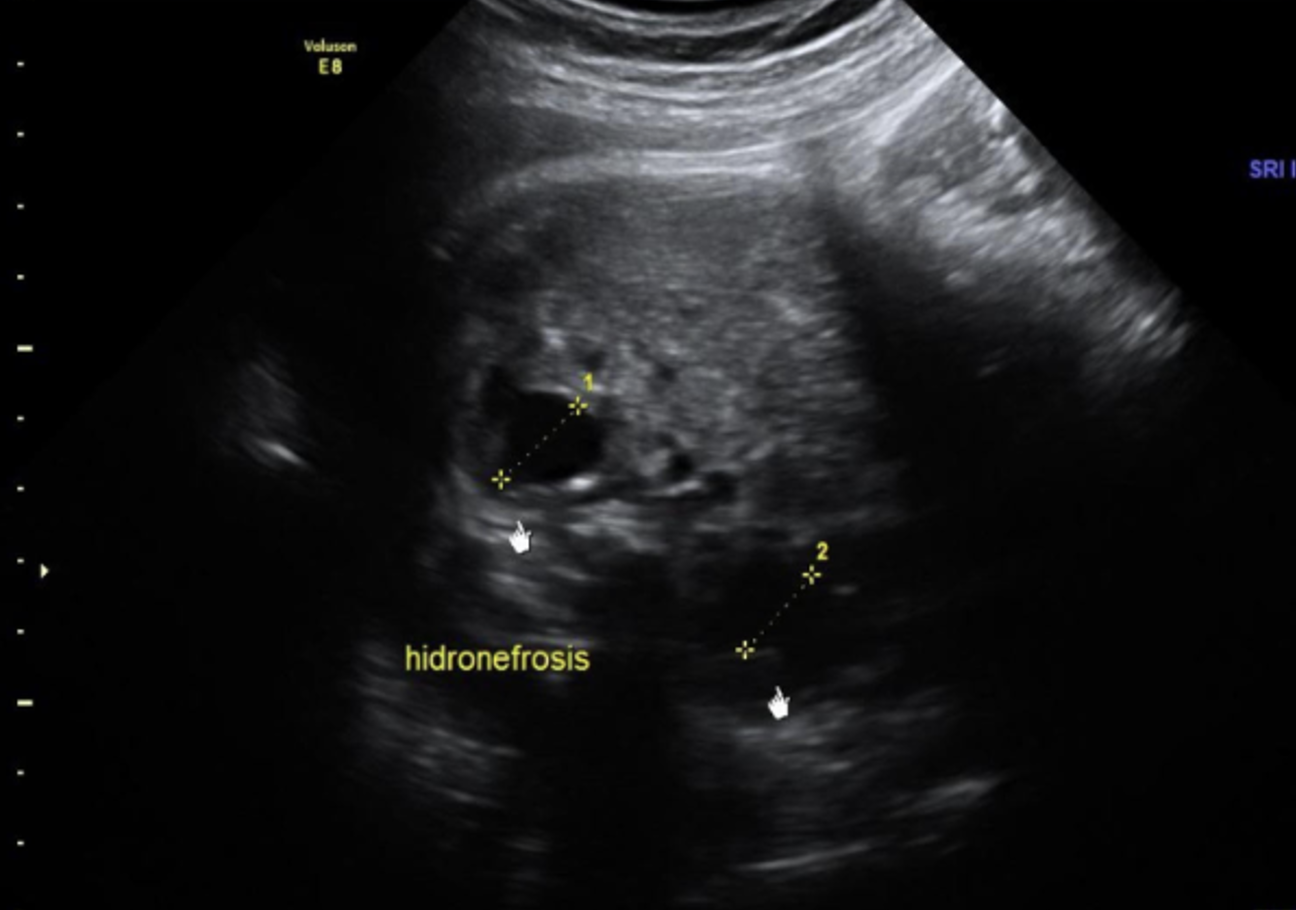
Case Report: We describe the case of a female neonate at 38.5 weeks of gestation with a history of bilateral pyelocaliceal dilation detected on prenatal ultrasound. Subsequently, she presented with recurrent urinary tract infections.
Diagnostic Workshop: Postnatal studies showed bilateral hydronephrosis with complete pyelocaliceal duplication in both kidneys. The patient experienced episodes of neonatal sepsis and urinary tract infections caused by multidrug-resistant bacteria. She was treated surgically with a ureteroureteral anastomosis, a technique that preserved renal function and reduced complications.
Discussion: Ureteral duplication can be complete or incomplete and is often associated with hydronephrosis and recurrent infections. Surgical treatment is indicated in cases of obstruction, vesicoureteral reflux, or recurrent infections. Ureteroureteral anastomosis is a conservative option with lower morbidity than ureterovesical reimplantation.
Conclusions: Prenatal diagnosis of urinary tract anomalies allows for adequate follow-up and reduces complications. Ureteroureteral anastomosis is a safe and effective alternative in pediatric patients with a duplicated collecting system.
Downloads
Article Details

This work is licensed under a Creative Commons Attribution-NonCommercial-ShareAlike 4.0 International License.