Strategies for preventing pressure ulcers in cancer patients receiving home-based palliative care A systematic review.
Article Sidebar
Main Article Content
Abstract
Introduction: Pressure ulcers (PU) are common in patients with advanced cancer receiving palliative care at home, often due to immobility, cachexia, and decreased tissue perfusion. They cause pain, infections, reduced quality of life, and increased mortality, posing an ethical dilemma between prevention and comfort at the end of life. This work aims to synthesize recent evidence (2015–2025) on strategies for PU prevention in cancer patients under home-based palliative care, identifying effective interventions, barriers, and knowledge gaps.
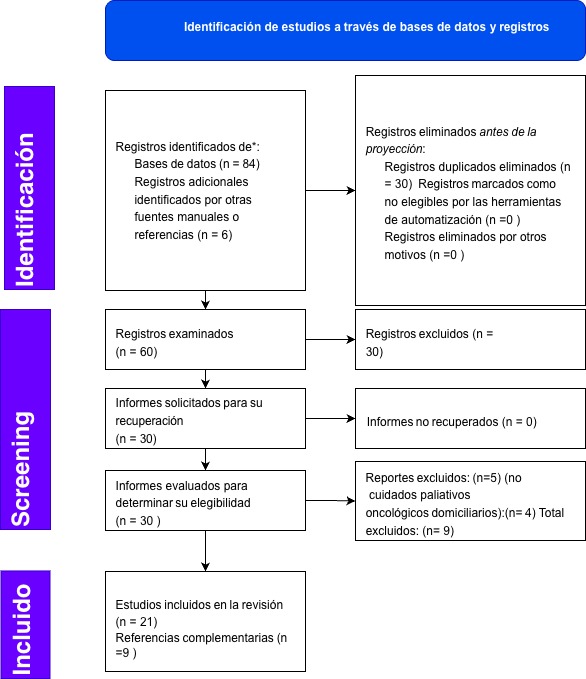
Materials and methods: A qualitative systematic review was conducted without meta-analysis, following the PRISMA guideline. Biomedical databases were searched, and 21 sources along with 9 supplementary references were included (covering quantitative, qualitative studies, reviews, and guidelines).
Results: The most important preventive strategies include: active involvement of family caregivers through education programs; meticulous skin care and hygiene; use of pressure-relieving surfaces and repositioning tailored to patient tolerance; and prevention of device-related injuries. Evidence specific to the palliative population remains limited, mainly consisting of observational studies and expert consensus.
Conclusion: PU prevention in home-based palliative care requires a comprehensive approach focused on the patient and caregiver. Evidence-based interventions, caregiver education, adapted mobilization, and technological support can decrease PU incidence and lessen suffering, while always respecting the wishes and comfort of terminal patients.
Downloads
Article Details

This work is licensed under a Creative Commons Attribution-NonCommercial-ShareAlike 4.0 International License.