Role of Health Posts in Primary Healthcare in the Region of the Americas and Their Community Impact A Systematic Review.
Article Sidebar
Main Article Content
Abstract
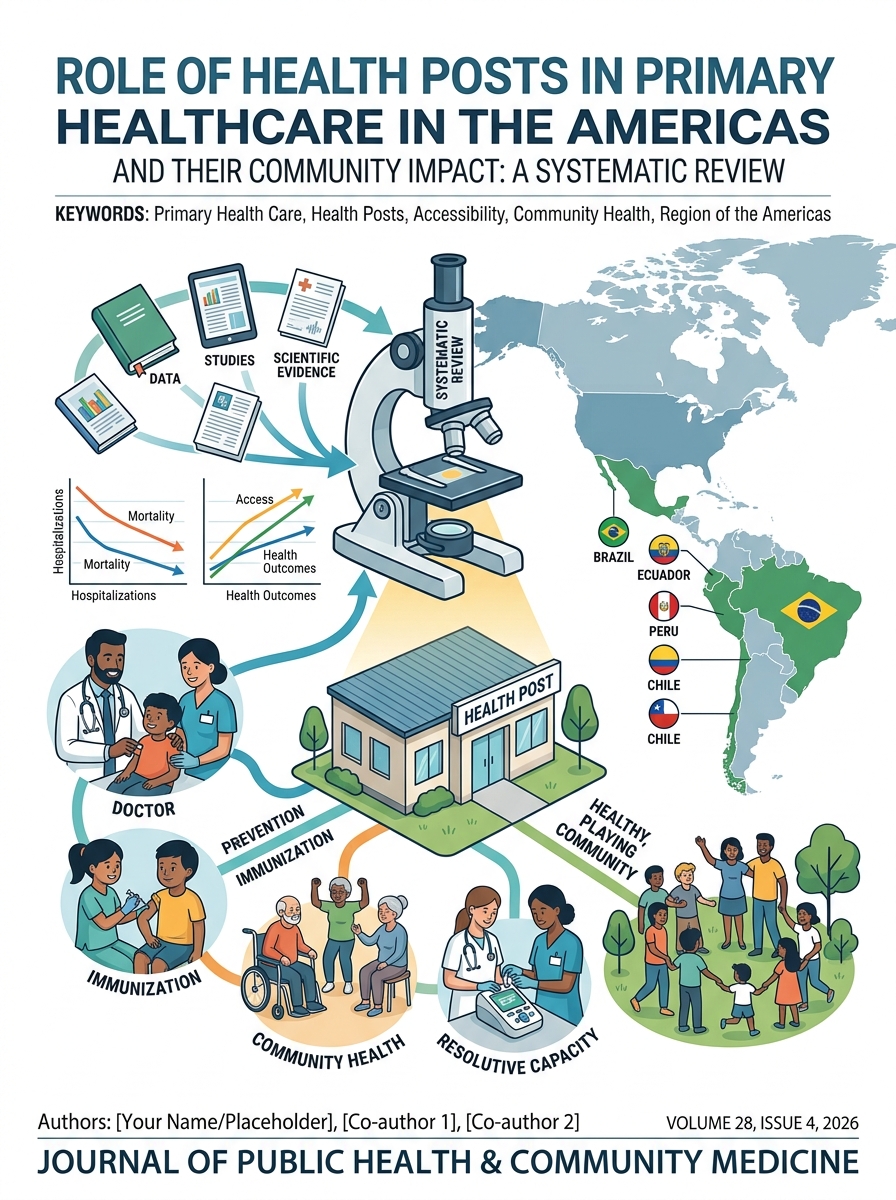
Introduction: Primary Healthcare (PHC) is fundamental to reducing equity gaps in the Region of the Americas, where health posts translate public policies into concrete territorial interventions. Given persistent fragmentation and instability in health systems, this study analyzed the role of health posts in PHC and examined their community impact from healthcare, structural, and managerial perspectives.
Materials and Methods: We conducted a systematic review following the PRISMA 2020 guidelines and the PECO framework. We searched PubMed, LILACS, and SciELO from December 2025 to March 2026. We included primary quantitative studies published from 2021 onward in Scopus Q1/Q2-indexed journals, conducted in the Americas, and focused on the impact of first-level health posts. We excluded qualitative studies, editorials, and research set in secondary or tertiary care. Of the 186 identified records, we selected 11 studies and critically appraised their methodological quality using the Joanna Briggs Institute (JBI) tools.
Results: The sample was mostly concentrated in Brazil (63.6%), followed by Peru, Ecuador, and Chile. Nine articles reported favorable findings on PHC performance, one yielded mixed results, and one focused on structural gaps. Home visits and mobile health teams strengthened initial access for vulnerable populations. The study showed positive impacts on coverage rates for routine immunization, early diagnosis, and chronic disease management, reducing preventable hospitalizations and child mortality. However, resolutive capacity was heavily conditioned by the availability of point-of-care diagnostics, equipment deficiencies, chronic shortages of essential medicines, and a lack of trained healthcare staff in rural areas.
Conclusion: Health posts are indispensable assets for health equity in the Region of the Americas. Although they expand preventive access and reduce overall morbidity and mortality, budgetary constraints and organizational failures threaten their effectiveness in communities. Consolidating a lasting impact requires sustainable structural investment to enhance local resolutive capacity and optimize territorial management models.
Downloads
Article Details

This work is licensed under a Creative Commons Attribution-NonCommercial-ShareAlike 4.0 International License.