Cardiac Amyloidosis: The Silent Enemy Behind Heart Failure
Article Sidebar
Main Article Content
Abstract
Introduction: Cardiac amyloidosis is a progressive infiltrative cardiomyopathy caused by the extracellular deposition of misfolded amyloid fibrils. The immunoglobulin light-chain (AL) subtype, frequently associated with plasma cell dyscrasias such as multiple myeloma, carries an ominous prognosis without early diagnosis. Clinically, it presents as heart failure with preserved ejection fraction and disproportionate ventricular hypertrophy.
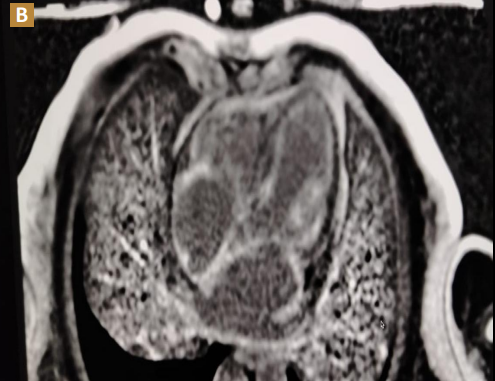
Case Report: A 73-year-old male with a history of systemic arterial hypertension and type 2 diabetes mellitus presented with progressive dyspnea, fatigue, and lower extremity edema consistent with congestive heart failure. Electrocardiography revealed low voltage in limb leads and complete right bundle branch block (voltage-to-mass mismatch). Transthoracic echocardiography demonstrated preserved left ventricular ejection fraction (65%), concentric septal-predominant hypertrophy with a granular sparkling myocardial pattern, grade II diastolic dysfunction, right ventricular systolic dysfunction (TAPSE: 13 mm), and reduced global longitudinal strain (-10%) with relative apical sparing. Cardiac magnetic resonance confirmed concentric biventricular hypertrophy and diffusely elevated native T1 mapping values, consistent with amyloid infiltration. Finally, bone marrow biopsy revealed 60% infiltration by plasma cell neoplasm (CD138-positive), establishing the diagnosis of AL cardiac amyloidosis secondary to multiple myeloma.
Case Evolution: Following diagnostic confirmation through multimodal imaging and histopathological assessment, supportive cardiological medical therapy was initiated for hemodynamic and congestive management, and the patient was promptly referred to hematology to commence targeted therapy against the underlying clonal dyscrasia.
Conclusions: High clinical suspicion prompted by concentric ventricular hypertrophy alongside low electrocardiographic voltage and apical sparing on longitudinal strain is essential for diagnosing cardiac amyloidosis. Integrating advanced cardiac imaging with hematological workup enables accurate typing of AL amyloidosis and timely multidisciplinary management to favorably impact survival.
Downloads
Article Details

This work is licensed under a Creative Commons Attribution-NonCommercial-ShareAlike 4.0 International License.