Mitral valve prolapse syndrome in a Marfan-like phenotype
Article Sidebar
Main Article Content
Abstract
Introduction: MASS syndrome (mitral valve, aorta, skeleton, and skin involvement) is a hereditary connective tissue disorder within the Marfan-like phenotypic spectrum. Unlike classic Marfan syndrome, it occurs without ectopia lentis or significant aneurysmal dilatation of the aortic root, carrying a lower risk of acute aortic events while retaining the potential to develop myxomatous valvular degeneration and hemodynamically significant mitral valve prolapse (MVP).
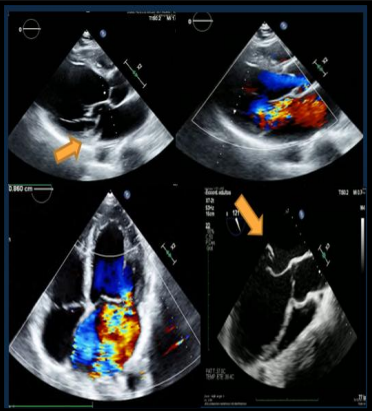
Case Report: A 57-year-old male with a history of systemic arterial hypertension and newly diagnosed atrial fibrillation presented with a one-month history of progressive dyspnea (NYHA functional class III/IV), angina, and palpitations. Physical examination revealed a leptosomic habitus, arachnodactyly, pectus excavatum, micrognathia (revised Ghent systemic score of 7), and a grade IV/VI holosystolic mitral murmur with a thrill radiating to the axilla. The electrocardiogram showed bifascicular block and left atrial enlargement. Transthoracic and transesophageal echocardiography demonstrated severe mitral regurgitation (Carpentier type II) secondary to posterior leaflet prolapse due to chordae tendineae rupture, with a left ventricular ejection fraction (LVEF) of 60% and a global longitudinal strain of -11%. Coronary angiography ruled out obstructive lesions, and exome genetic testing was negative for Marfan syndrome-associated mutations, confirming the diagnosis of MASS syndrome.
Case Evolution: Given a low surgical risk (EuroSCORE II: 1.23%), the patient underwent mitral valve replacement with a 31-mm mechanical prosthesis without intraoperative complications. Postoperative echocardiography revealed a normally functioning prosthesis without paravalvular leaks and an LVEF of 42%, reflecting the unmasking of underlying systolic dysfunction following elimination of the regurgitant volume overload. The patient was discharged on optimal medical therapy and oral anticoagulation.
Conclusions: Clinical characterization using the revised Ghent criteria alongside genetic testing differentiates MASS syndrome from Marfan syndrome, guiding timely valvular intervention and establishing a more favorable aortic prognosis for both patient management and family counseling.
Downloads
Article Details

This work is licensed under a Creative Commons Attribution-NonCommercial-ShareAlike 4.0 International License.